
What to Do After a Horse Trailer Accident: Step-by-Step Guide From a TLAER Expert
Dr. Rebecca Husted has spent decades preparing veterinarians and first responders for exactly this kind of emergency. She holds a PhD in animal physiology from Clemson University, is a retired U.S. Army Signal Officer and combat veteran, and serves as president of Technical Large Animal Emergency Rescue (TLAER), the organization behind the first textbook ever written on large animal rescue, which she helped author.
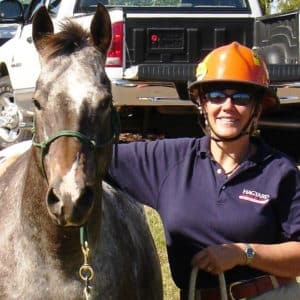
During a live webinar hosted by Double D Trailers, she walked attendees through what to actually do when a horse trailer accident happens, because these accidents do happen, often enough that she's built a career around helping people prepare for them. Here's what she told them, step by step.
This article picks up where our before-the-accident prevention guide leaves off, the moment something has already gone wrong.
1. Call 911 First
Your first call goes to 911, not a friend, not a trailer shop. In her words:
"Who do you call? First call 911."
Response times can be long, especially in rural areas. She noted that help may take close to an hour to arrive in remote locations.

Your second call goes to your veterinarian. The vet needs to be part of the decision-making on scene, whether that means treating an injured horse, helping triage the situation or, in the worst case, making a euthanasia decision. She was also upfront that even a willing veterinarian may take an hour or two to reach you. Unlike emergency responders, they're driving at normal traffic speed without lights or sirens.
One thing worth doing before you're ever in this situation is calling your local veterinarian and county emergency manager to ask what the plan would actually be.
As she put it:
"You as a horse owner in your area might want to reach out to your veterinarians and to your emergency manager in your county and say, hey, if we had this happen on the interstate that goes through our county, what would you guys do?"
There's no national standard for how these situations are handled, and some veterinarians won't treat a horse that isn't already their client. That's something you'd much rather find out ahead of time than on the side of the interstate.
2. Check Your People, Then Your Horses
Before anything else:
"Check your people, then you can check your horses, preferably through the camera."
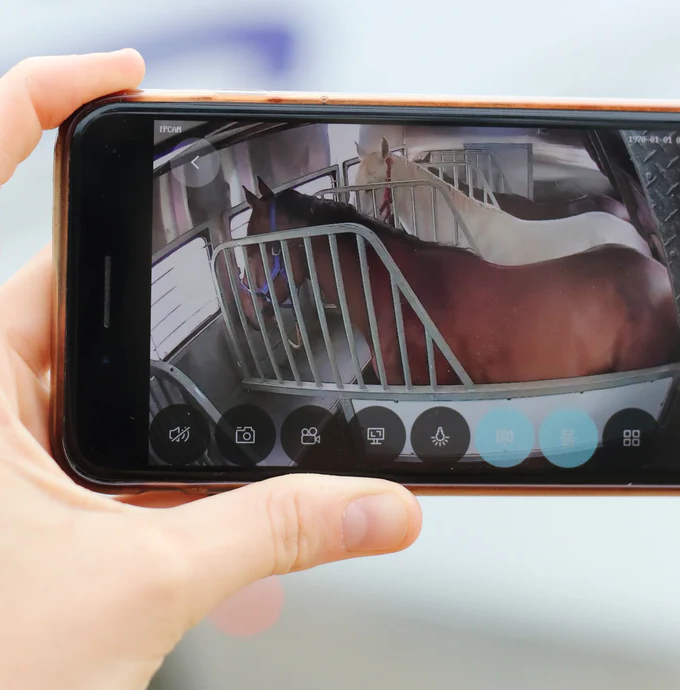
The instinct may be to immediately focus on the horses, but the people involved in the wreck come first. Then, if your trailer camera allows it, assess the horses without opening the trailer.
3. Understand You're Not Running the Scene
Once fire and rescue arrive, the scene belongs to them, not you.
This was one of the clearest points Husted made:
"If you have your wreck on a public roadway, you ain't in charge. When the fire department gets there, they're in charge."
Her reasoning is straightforward. Even if the responders don't specialize in horses, firefighters routinely handle vehicle extrications, know how to manage traffic hazards around an accident scene, and have equipment and lighting most horse owners simply don't carry.
Her advice was simple: let them do the job they're trained to do. Give responders the information they need, answer their questions and resist the urge to direct the rescue yourself.
4. Know Everyone’s Job BEFORE You Leave
Don't wait for an accident to start figuring out who is supposed to do what. Before you leave home, talk through the "what ifs" with the people traveling with you. If something happens, who calls 911? Who can help keep people away from traffic? Who handles the horses if it's safe to do so?
Husted also emphasized using the people who are available once an emergency happens:
"Build that team on scene. Who is with you? Is it your kid? Is it your grandma? Is it your friend?... Who does what? Hey, I need you to call 911 and give them the thing, right? Give them a job. I need you to go 100 yards down the thing here and put out a couple of cones... I need you — there's a house right there that has horses, you know, go knock on those people's door... give them a job that's relevant to the situation."
The goal is simple: people should know how they can help instead of everyone reacting at once or standing around waiting for someone else to take charge. And once trained responders arrive, let them take over.
5. Don't Open the Trailer Doors
Husted's default recommendation is to leave the trailer closed if at all possible.
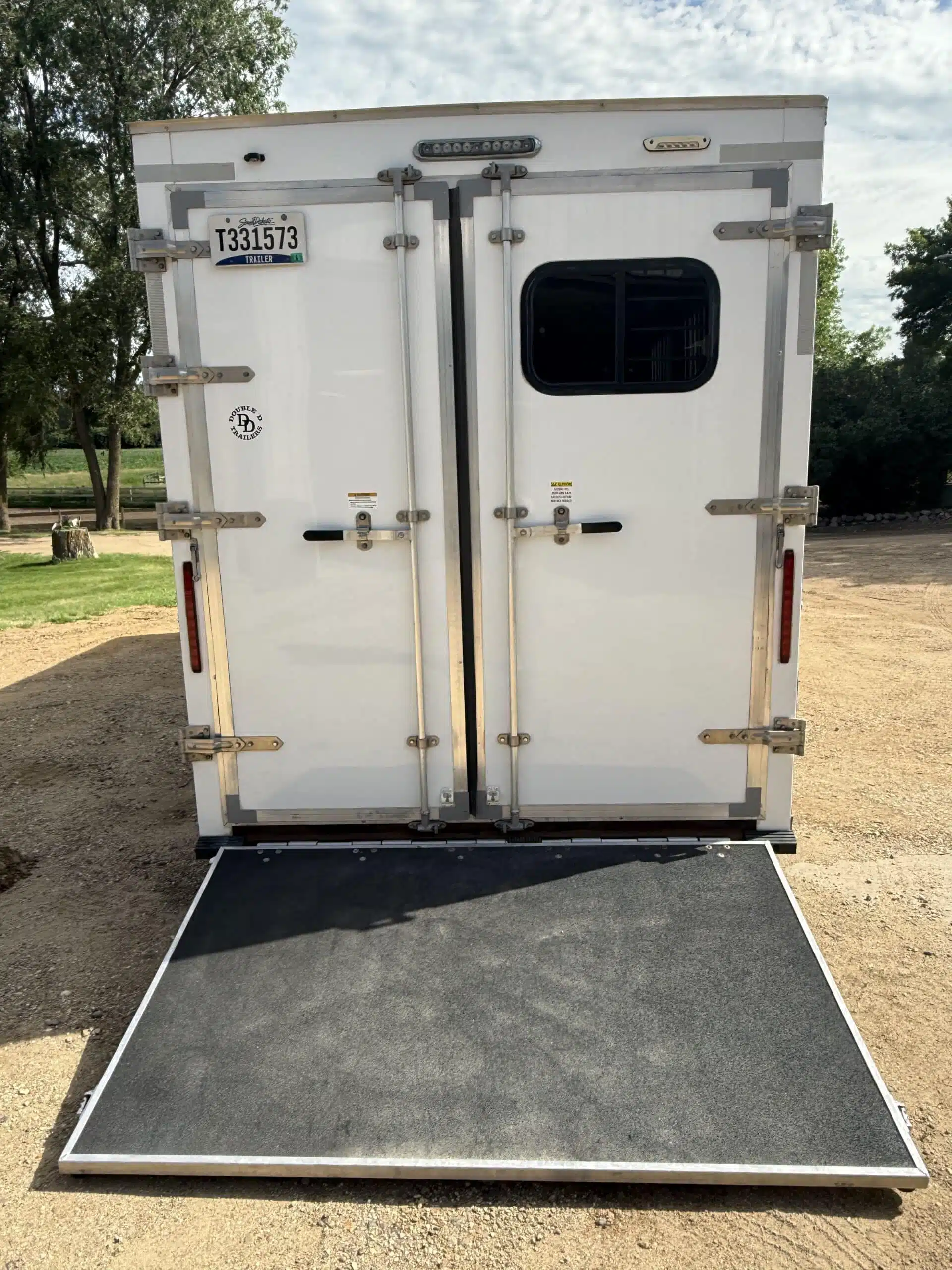
A horse that has just been through an accident may try to leave the moment it sees an opening, putting both the horse and anyone standing nearby in danger.
"As soon as you open it up, they're like, I'm leaving. I've had enough of this."
The one exception is fire or smoke:
"If it's on a roadway, absolutely not, unless it's fire and smoke. If it's smoke and fire, then you need to get the horses out."
So unless there is an immediate threat requiring evacuation, resist the urge to open the doors and unload.
6. If the Horse Is Standing, Offer Alfalfa Hay
Once the immediate wreck has stopped, most horses that are able to stand will do so.
While you're waiting for help, Husted recommends leaving the horse in the trailer and offering alfalfa hay:
"If that horse is standing, give him some alfalfa hay. Don't take him off the trailer, let's wait for help... and if he's eating alfalfa hay, guess what? His heart rate drops, his panic level drops, all those things. It's good for everybody."
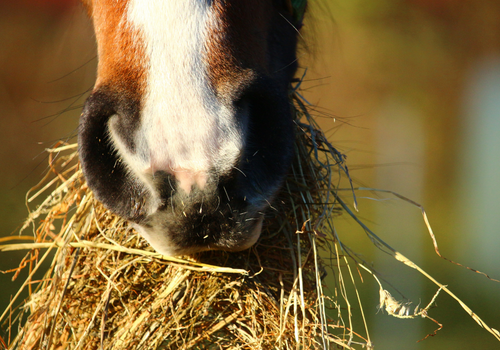
The important part is what not to do: don't assume a standing horse needs to immediately come off the trailer. If the situation is stable, wait for help.
7. Loop In Your Veterinarian, Even If They're States Away
Your regular veterinarian can still be useful even when the accident happens hundreds of miles from home.
Husted described a hypothetical wreck in Montana where she would still call her veterinarian back in Georgia. Photos and a short video can communicate the situation far more effectively than trying to describe everything over the phone.
"Nothing explains the situation better than a photo in a short video."
This is also where having an established veterinary-client-patient relationship, or VCPR, becomes valuable.
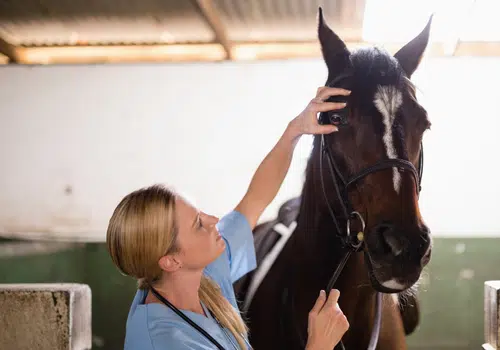
If your horse has seen your regular veterinarian within the past year, that veterinarian may be able to vouch for you when you're trying to get help from an unfamiliar veterinarian near the accident.
Husted also pointed horse owners to the American Association of Equine Practitioners' website as a resource for finding veterinarians by location while traveling.
8. Know What Changes If There's a Fire

Fire changes everything.
Husted treated it as the scenario requiring the fastest decisions: try the fire extinguisher, and if it isn't working, get the horses off the trailer and call 911.
If you're considering unhitching the trailer from a burning truck, she stressed one step that's easy to forget in the panic:
"You better chock it, because there's pictures of fire trucks that have gotten loose that didn't have chocks on them, and they've gone in the ditch... it's already bad enough you've got a fire, you unhitch that truck — now your trailer's loose, and it rolls into the ditch with your horses in it, and flips over."
She also discussed the type and location of fire extinguishers.
Most common extinguishers are ABC type. She explained that they slow a fire using a baking-soda-based dry chemical, but in a trailer filled with shavings, that powder can also make it difficult to see and breathe. In that situation, she noted that a water extinguisher may be more appropriate. Her practical recommendation: carry two extinguishers, one in the truck and one in the trailer. If the truck itself catches fire, you don't want your only extinguisher stored somewhere you can't safely reach.
9. Schedule a Vet Visit After Every Wreck, Even If the Horse Seems Fine
A horse standing and walking after an accident doesn't necessarily mean it escaped injury.
"Just because he stands up and walks out of the trailer doesn't mean he feels great."
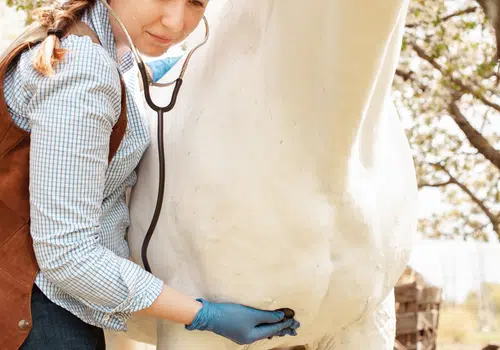
Husted compared it to what people often experience after a car accident: you may feel surprisingly normal immediately afterward, then start feeling the effects later. Her recommendation is clear: have your horse evaluated by a veterinarian after a wreck, even if everything looks fine at first.
Also Worth Knowing: Tying Horses in the Trailer
Whether a horse should be tied while traveling depends on the trailer configuration and the individual horse, Husted explained. In some trailer setups, horses may be able to safely travel untied and lower their heads. In others, tying is necessary. She gave the example of her straight-load two-horse trailer, where she ties her horses so they cannot attempt to turn around.
When a horse does need to be tied in the trailer, Husted prefers the breakaway point to be at the trailer tie rather than on the halter itself.
Her preference is a good halter and lead rope attached to something at the trailer tie point that will break under a catastrophic load. She mentioned hay string, certain plastic breakaway ties and even an appropriate zip tie as examples. Orange hay string, she noted, breaks at roughly 80 pounds of working load, well within the force a horse can generate with its head during a wreck.
She acknowledged that a breakaway halter may be helpful if a horse gets its head trapped in something. The tradeoff, she explained, is that if the halter comes off during an accident, you may then have to put another halter on a frightened horse inside the trailer or along the side of the road.
Her preference is a good halter and lead rope, with the breakaway component at the trailer tie point, something designed to give way under a catastrophic load. That way, if the tie breaks, the horse still has its halter and lead rope on, which makes it easier to lead the horse out if necessary, especially in a fire.
The Bottom Line
The biggest takeaway from Husted's advice isn't a particular piece of rescue equipment. It's preparation.
Know who you're going to call. Know what everyone traveling with you should do. Carry the equipment you're likely to need. Establish a relationship with your veterinarian before you travel. And when trained emergency responders arrive, let them do their jobs. Husted summed it up this way:
"It's all about prevention, folks. Yes, there are catastrophic situations, but if you do all the prevention, and you have the right attitude, and all the tools, it sure does make it easier to survive the wreck."
FAQ: Horse Trailer Accidents
What's the first thing I should do after a horse trailer accident? Call 911 first, then your veterinarian.
Should I try to get my horse out of the trailer myself? Not on a roadway, unless there's fire or smoke.
Why shouldn't I open the trailer doors right away? A horse in a dark, enclosed space may try to bolt the moment it sees an opening, which puts anyone nearby at risk.
Does my horse need to see a vet if it seems fine after the wreck? Yes. Horses can seem fine immediately after a wreck and develop problems days later, the same way people sometimes do.
What is a VCPR, and why does it matter in an emergency? A veterinary client-patient relationship, the legal relationship you have with a vet who has examined your horse within the past year. Having one makes it easier for your regular vet to coordinate with an unfamiliar vet near an accident site, even far from home.
Watch the full webinar with Dr. Rebecca Husted here, or explore our before-the-accident prevention checklist for what to look for in a trailer built with safety in mind.
Watch More Safety Webinars | Book a Video Call With Our Team