
Choosing the Right Horse Trailer Dividers
Horse trailer dividers come in a few main types. Head (partial) dividers and full dividers, in either solid or open (tubular) designs; and the right choice depends on your horses' size, temperament, and how many you haul. Just as important as the type is what the divider is made of and how well it's padded, because in a sudden stop or collision those details are what protect your horse.
It's easy to overlook stall dividers when you're designing a trailer, but alongside properly placed tie points and comfortable flooring, they make a real difference to a horse that may already be stressed by the ride. Here's how to think through the options.
Head Dividers vs. Full Dividers
The first choice is whether you want full dividers or partial dividers, and many custom trailers use a combination of the two, especially when they'll carry a variety of horses.
Head (standard) dividers
Head dividers, also called standard dividers, separate the upper bodies and heads of your horses and leave an open space at the bottom. That open bottom is generally fine for well-behaved horses that get along, but older horses, studs, or foals may try to find their way underneath a partial divider.
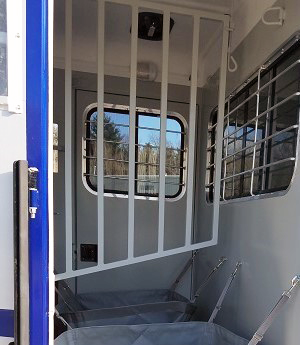
Full dividers
Full dividers are sometimes marketed as stud walls, and for good reason. These full-length dividers are built to take a pounding without letting one horse reach into another's stall. They're a good fit for front stalls (where you might carry extra hay from time to time) and for transporting small or unruly horses.
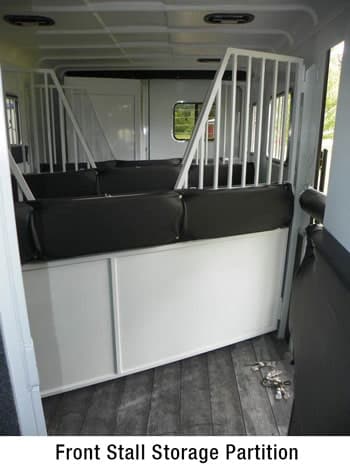
Solid Dividers vs. Open (Tubular) Dividers
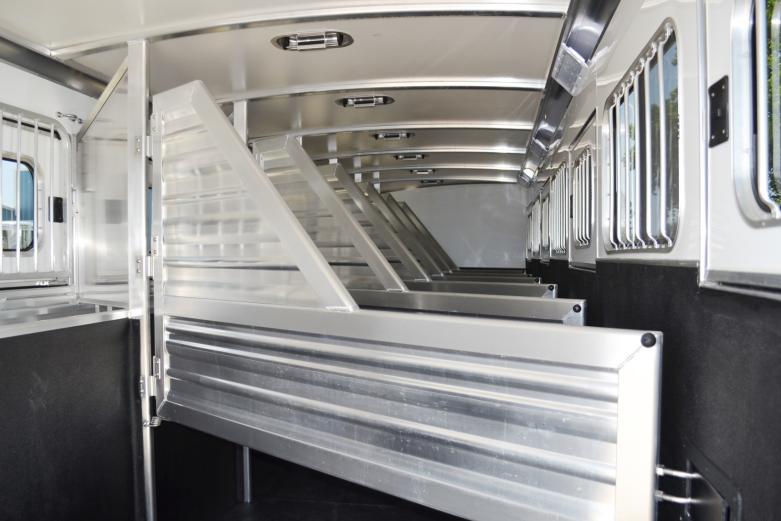
Beyond length, dividers are either solid or open. Many horses won't load into a trailer that feels too confining, which is why the open, see-through divider has become so popular. Open dividers use tubular framing that lets your horses see their travel mates and allows light and air to move through the stall area, which helps keep horses calmer and better ventilated on the road. Solid dividers, by contrast, block that airflow and visibility and can make a horse feel more confined and anxious. At Double D Trailers, we use open dividers for this reason.
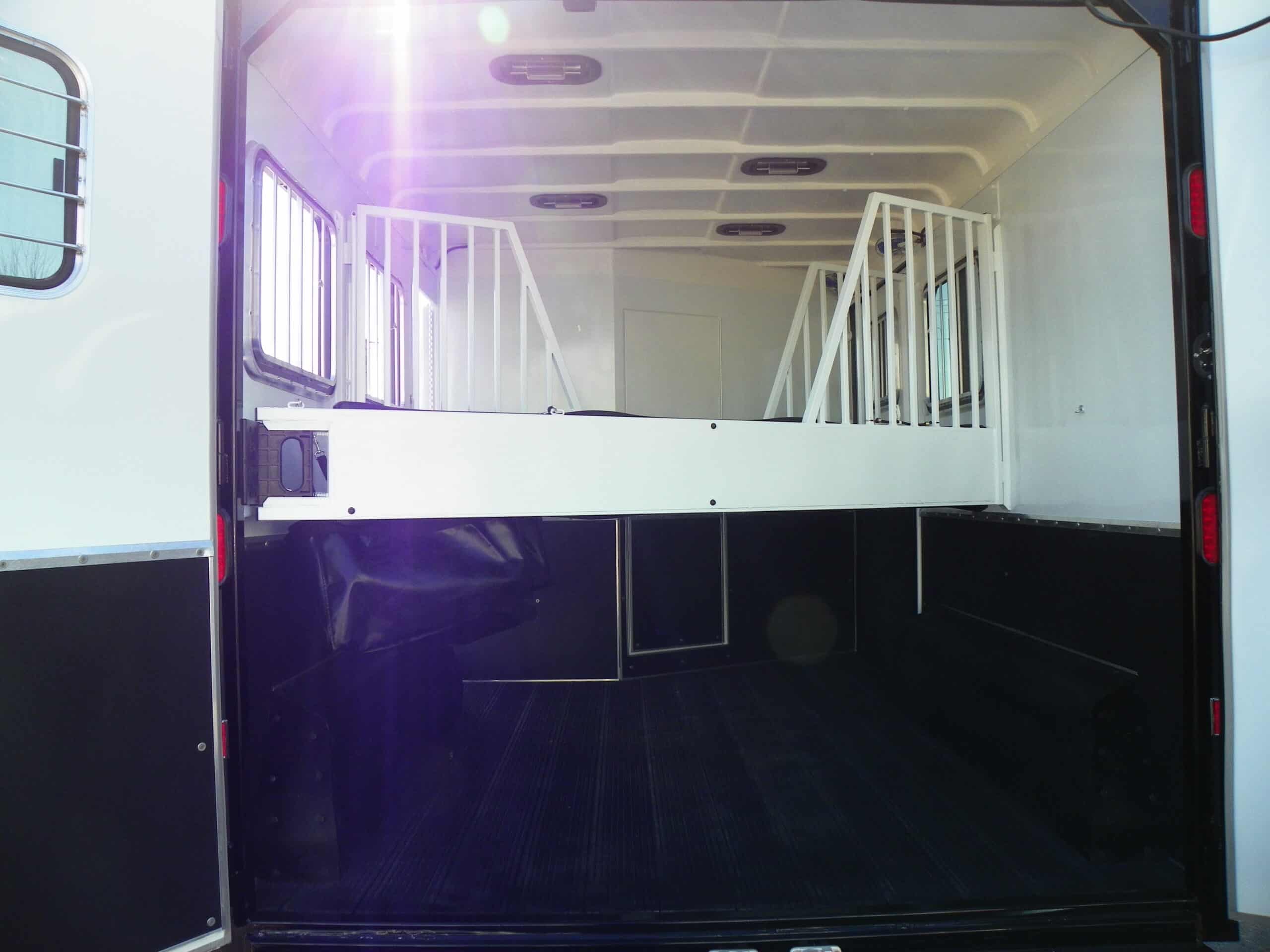
Divider Material Matters as Much as the Type
The strongest design won't protect your horse if the divider is made of the wrong material. Aluminum dividers are lightweight, but aluminum is brittle and prone to bending; under the stress of an accident it can crack or break, and a broken divider can become a sharp hazard your horse gets caught against. Because of that, look for dividers built from stronger material. Double D Trailers builds around Z-Frame® technology, which infuses zinc and chromate to combine the light weight of aluminum with strength greater than regular steel, while also resisting the corrosion caused by horse urine. The result is a divider and frame system meant to hold its shape and keep protecting your horse rather than crumpling.
Learn what a real horse trailer accident taught one owner.
Padding on Your Dividers
Padding is the only thing standing between your horse and a solid metal divider, so don't skimp on it. You may get away with less on a small straight-load trailer, but slant load horse trailers should be padded as much as possible. During a sudden stop or collision, a horse can be thrown into the dividers, and thick padding makes serious injury far less likely. Double D Trailers uses thick handmade padding over the dividers and walls, with divider padding at least two inches thick, and covers the divider pin so no sharp metal is left exposed.
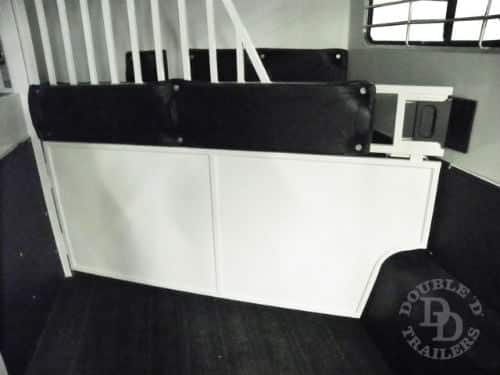
Customizing and Replacing Your Dividers
Because the right dividers depend so heavily on the horses you carry, anything from big draft horses to miniature cart pullers, dividers shouldn't be a one-size-fits-all decision. You can mix full and open dividers in the same custom trailer to suit different horses, and if your needs change (say you add a new horse), Double D Trailers offers replacement dividers so you can reconfigure the interior rather than replace the trailer. Selecting dividers with your specific horses in mind should be part of your overall custom trailer design.
For the complete list of features to check before you buy, see our guide to essential horse trailer safety features.
Frequently Asked Questions
What type of horse trailer dividers are best?
Open (tubular) dividers are generally best because they give horses better airflow and visibility, which reduces travel stress. Full dividers are a good option for more temperamental horses since they completely separate one horse from another. Many owners use a combination depending on the horses they haul.
What's the difference between head dividers and full dividers?
Head (standard) dividers separate the horses' upper bodies and heads but leave an open space at the bottom, which suits well-behaved horses that travel together. Full dividers run the full length of the stall to keep horses completely separated, making them better for studs, foals, or unruly horses.
Are aluminum horse trailer dividers safe?
Aluminum is lightweight but brittle and prone to bending, and it can crack or break under the stress of an accident. Stronger materials like Z-Frame® are designed to hold their shape and keep protecting the horse, which is why they're preferable for dividers and frames.
How much padding should horse trailer dividers have?
Divider padding should be at least two inches thick, and any sharp metal areas, including the divider pin, should be covered. Padding is what keeps a horse from striking bare metal if it's thrown into a divider during a hard stop.
Does Double D Trailers offer replacement dividers?
Yes. Double D Trailers offers replacement dividers so you can adjust your trailer's interior as your needs change, and you can combine full and open dividers within the same custom trailer.